The Trouble with Treating a Headline as a Summary
A headline is a doorway, not a full summary. Learn how to separate its attention-grabbing job from the qualifications and context in the story beneath it.
You open a weekly news bulletin over breakfast and see a headline that seems to settle a complicated question in a few bold words. The headline may be accurate, yet still leave out the conditions that change what the story actually says. Reading it as a complete summary turns a useful signpost into a misleading substitute for the report.
A headline is designed to identify a story and invite a reader to continue. A summary has a different job: it should convey the main point and the qualifications needed to understand it. In a bulletin, those two functions sit close together, but they are not interchangeable.
A headline names the story’s point of entry
Editors have limited space at the top of a story, especially in a compact bulletin or on a narrow screen. The headline must help readers recognise the subject quickly and decide whether to read on. It therefore selects a central angle, not every relevant detail.
That selection is not automatically a distortion. A story about a council’s proposed changes to bus routes might need to be identified by the proposal itself, while the headline leaves the affected neighbourhoods, timetable and public response to the text below. The headline points towards the subject; it does not reproduce the whole account.
Think of a headline as the label on a folder. A label helps you find the right folder, but it cannot tell you everything inside it. The problem begins when readers treat the label as though it were the contents.
A summary carries qualifications that a headline cannot
A fair summary usually needs to show what is known, what remains uncertain, and who or what a claim applies to. Those distinctions often depend on small but important words: “proposed”, “some”, “may”, “according to” or “in a pilot area”. A headline may omit them for space or rhythm, even though the story relies on them.
Consider the difference between “Council changes bus routes” and “Council proposes changes to two bus routes”. The shorter version can make a plan sound settled and broad. The longer version makes clear both the status of the decision and its scope. The story may clarify those points in its opening paragraphs, but a reader who stops at the headline misses the distinction.
Headlines also compress the relationship between evidence and conclusion. A report might describe a small local survey, then explain why it cannot establish what residents elsewhere think. A headline focused on the survey’s most striking result may be literally connected to the story while making the result seem more general than it is.
Compression changes emphasis as well as length
Shortening a story is not simply a matter of removing words evenly. A headline’s writer must choose which actor, action or consequence deserves the reader’s attention. That choice gives the story a frame: it makes one aspect prominent and leaves other aspects in the background.
For example, a bulletin might report that a school will consult families before changing its lunch arrangements. A headline that foregrounds “School plans lunch changes” emphasises the possible change; one that foregrounds “Families invited to comment on lunch plans” emphasises the consultation. Neither necessarily contradicts the report, but each steers attention towards a different part of it.
Verb choice matters, too. “Warns”, “admits”, “backs” and “faces” can carry implications about conflict, responsibility or certainty. Such words are not automatically unfair: they may be supported by the article’s details. But they are signals to check how the report describes the event and whether the tone of the headline matches the evidence underneath.
There is also a difference between a headline that is incomplete and one that is misleading. Incompleteness is built into the format. A headline becomes more troubling when its wording implies something the story does not support, hides a decisive qualification, or presents an allegation as an established fact. The distinction is not always obvious at a glance, which is why the text matters.
Read the headline and summary as separate layers
A useful reading habit is to treat the headline as an invitation, then use the summary or opening paragraphs to check its meaning. Ask what the headline identifies, then ask what the accompanying text adds. Look especially for the status of an event, the people or places covered, and the source of any claim.
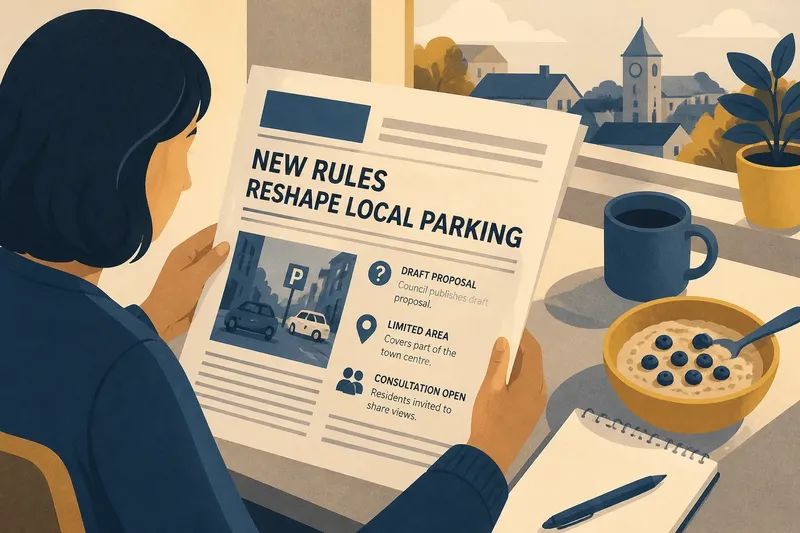
Say a weekly bulletin carries the headline “New rules reshape local parking”. Imagine the story beneath it says the council has published a draft proposal covering a small part of the town centre, with a consultation still open. The headline directs attention to parking policy; the summary supplies the draft status, limited area and opportunity to comment. A reader who keeps those layers distinct is less likely to mistake a proposal for a change already in force.
This approach is not about distrusting every headline or searching for hidden motives. It is about assigning each part of the bulletin the right task. The headline helps locate and prioritise a story; the summary provides a compact account; the full report gives room for evidence, attribution and competing details.
What should you check before sharing a headline?
Does the headline describe a decision or a proposal?
Look for words that mark whether something has happened, is planned, or is only being considered. If the headline sounds final but the text describes a draft or consultation, share the more precise wording rather than presenting the idea as settled.
Who or what does the claim cover?
Check whether the report concerns a particular neighbourhood, group, organisation or period. A broad headline can conceal a narrow scope, so keep the stated limits attached to the claim when discussing it.
Where does the information come from?
Notice whether a statement is attributed to officials, a named organisation, a witness or the bulletin’s own reporting. Attribution helps distinguish a reported claim from an independently established fact; preserve that distinction when passing the story on.
Does the opening text support the headline’s tone?
Read beyond the title and compare its strongest verb or implication with the report’s evidence. If the article describes a possibility while the headline sounds certain, use cautious wording and avoid repeating the stronger claim as fact.
Use a more complete line when the headline travels
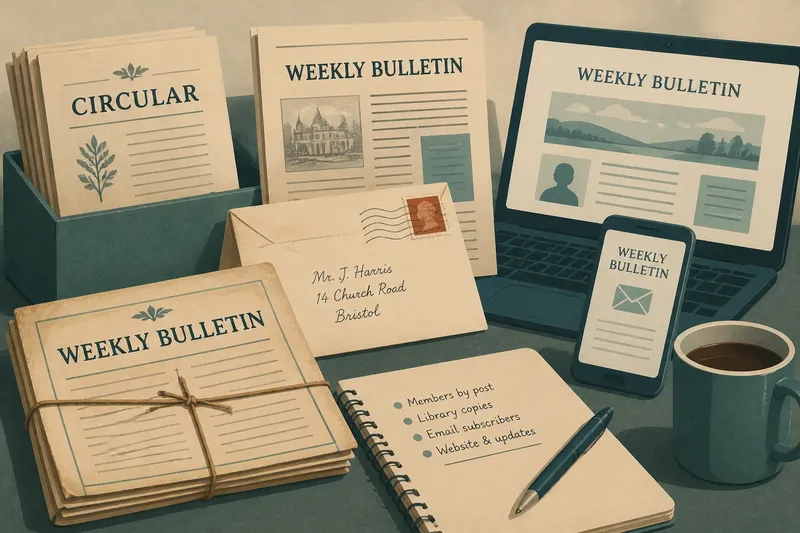
Headlines often circulate without the summary that originally accompanied them. They may appear in a notification, a group chat, a printed contents panel or someone’s spoken account of the bulletin. Once separated from the story, their omissions become harder to notice, and a compressed phrase can acquire more certainty than the report warrants.
When sharing a story, add the qualification that changes its meaning. “The council is considering a draft parking plan” is more informative than repeating a headline that sounds like new rules are already in force. If the bulletin’s summary gives a useful boundary, such as the area covered or the source of a claim, include it rather than assuming readers will open the link.
For a weekly reader, the practical distinction is simple: take a headline as a route into the story, not as a replacement for its summary. The summary should make the central point legible with its essential limits; the full report lets you inspect how that point is supported. When a headline seems decisive, the next useful move is to find the sentence that tells you what has actually happened.