A Sunday Read Through a Bulletin’s Sections
A Sunday read through a bulletin’s sections helps you spot new developments, check what has changed since last week and keep a useful record.
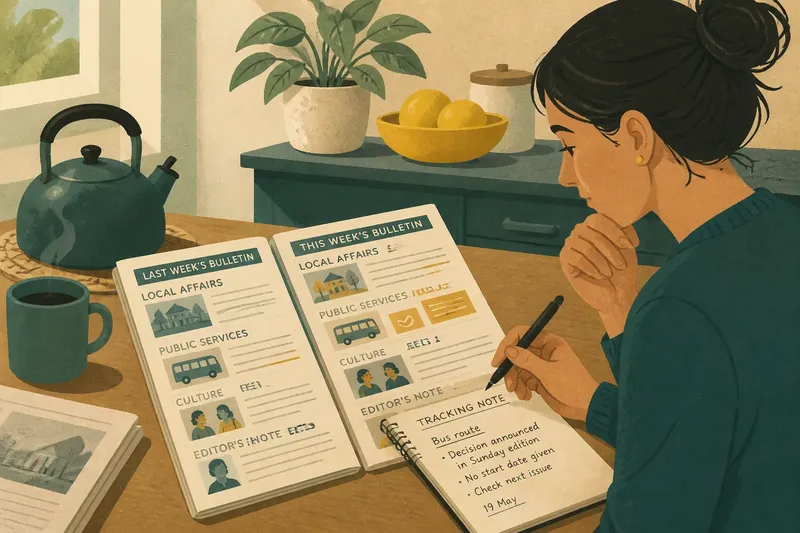
The kettle clicks off beside last week’s folded bulletin, and you notice a new edition waiting in your inbox. A Sunday read through a bulletin’s sections can help you follow what has changed, rather than simply repeat the same reading routine each week.
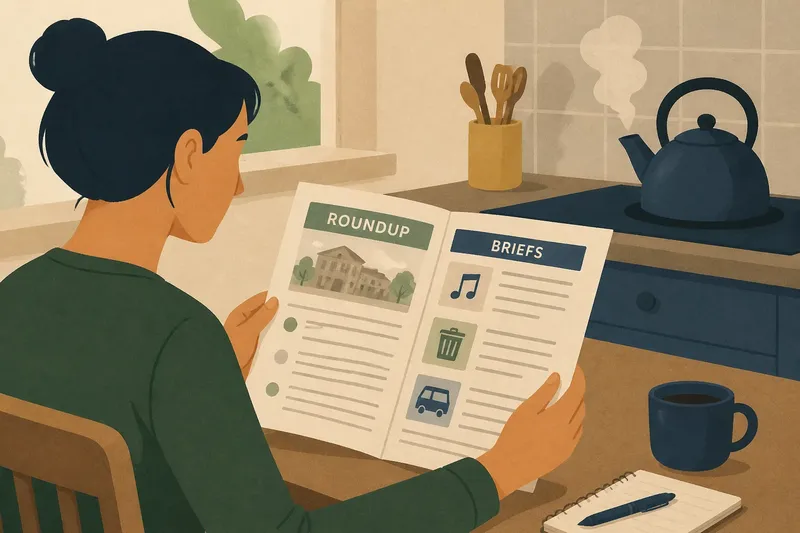
Imagine Mara keeps a weekly local bulletin on her kitchen table. Its regular sections cover local affairs, public services, culture and notes from the editor; this week, she wants to see what has developed since the previous edition and keep track of an ongoing council decision.
Use recurring sections to follow the week’s thread
A bulletin’s regular sections make it easier to recognise continuing subjects. Mara checks the current edition against the previous one, looking for an update to the council decision, a new notice about local services and any change in the editor’s note.
She treats familiar headings as filing tabs, not as a promise that each item is unchanged or complete. A new item may add a response or clarify a detail; a recurring section may also contain unrelated news. She checks the item’s headline and opening before deciding whether it belongs to the thread she is following.
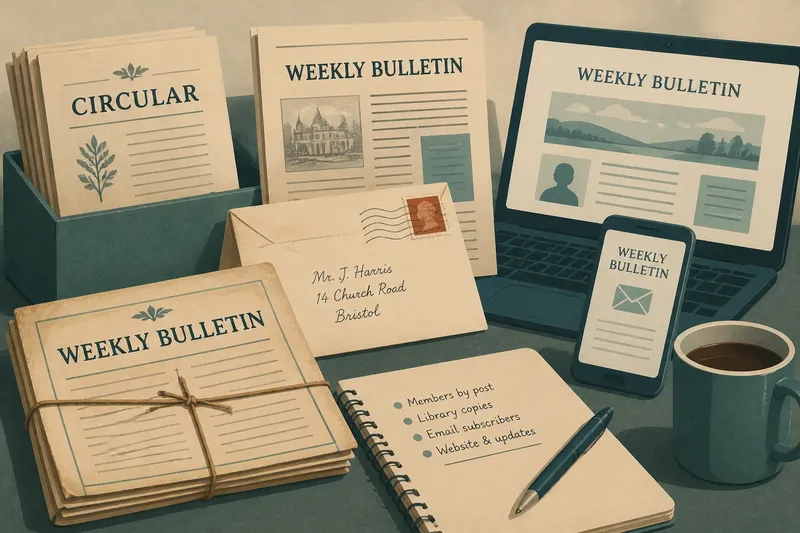
For a print bulletin, she can place the two editions side by side. In an email or web edition, she can open the earlier message or saved page in another tab. The comparison is a little like checking two pages in a diary: the headings help you find the entry, while the words tell you what actually happened.
Compare dates and updates before drawing a conclusion
Before comparing details, Mara checks the edition date and any update or correction note. A saved page may have changed since she first read it, and the newer edition may refer to events that were still unfolding in the older one.
She looks for what is newly reported, what remains the same and what is still uncertain. If the bulletin says a decision has been made, she checks whether the later item adds who responded, what happens next or whether the earlier account was corrected. This keeps a continuing story from becoming a jumble of statements made at different times.
Say Mara’s older bulletin says the council is considering a change to a bus route, while the new one says a decision has been announced. She checks both dates, reads the new item in full and notes that it describes the decision but gives no start date. Her resulting account is precise: the council has decided, according to the bulletin, but the timing is not stated there.
Keep a short record of what changed
A brief note can make the next Sunday’s comparison easier. Mara writes the subject, the edition date and the point that still needs checking, rather than copying whole passages or trying to remember every detail.
- If the edition date is later than the one you saved, then treat it as a newer account; if the dates are unclear, check the bulletin’s archive or ask its publisher which edition you are reading.
- If an item explicitly says it is corrected or updated, then read the revised wording before relying on your earlier note; if no change is described, keep the earlier account marked as unverified rather than assuming it still applies.
- If a continuing item names a new decision or response, then add that development to your note; if it repeats background without a new development, keep your existing note and mark the subject as still open.
- If the bulletin gives a date for the next action, then record that date beside the subject; if it gives no timing, note that the schedule is unspecified and look for a later update.
- If the new item links to a source document that answers your question, then open it and compare the relevant detail; if the link does not address your question, return to the bulletin instead of following it automatically.
- If two editions describe the same point differently, then keep both wordings with their dates and seek clarification from the publisher if the difference matters; if they agree, note the shared point without treating repetition as independent confirmation.
Mara’s note might read: “Bus route: decision announced in Sunday edition; no start date given; check next issue.” It is enough to show what she learned and what remains unanswered, without turning a quiet read into a research project.
Read each section according to its role
Not every section contributes to a continuing story in the same way. A short public-service notice may give an immediate change, while an editor’s note may explain why the bulletin has returned to a subject. A culture item could provide context or stand on its own.
Mara reads the item itself rather than assuming its section label tells her the whole story. She distinguishes a reported event from a prediction or comment, and notices whether the bulletin attributes a claim to a named organisation or person. If an important point is not clear, she marks the question instead of filling the gap herself.
How can you track a story across weekly editions?
Should you keep last week’s bulletin?
Keep an earlier edition when you need to compare wording or dates, and make sure you can tell it apart from the current one. If it is easy to find the archive online, a saved link and a short dated note may be enough.
What should you write in a tracking note?
Record the subject, edition date, new development and any unanswered question. This gives you a useful reference without copying the whole item.
How do you handle a correction?
Read the correction alongside the original point and update your note to show what changed. If the correction leaves an important detail unclear, contact the publisher or consult an appropriate primary source.
What if two editions seem to conflict?
Check their dates and whether one explicitly revises the other. If the difference remains important and unexplained, preserve both accounts with their dates and seek clarification rather than choosing the version that sounds more plausible.
Let the routine change when the story changes
Some weeks, Mara finds a clear update and can close her note. Other weeks, the bulletin offers only another small development or says nothing new. She records that distinction so silence does not turn into an assumption that the issue has been resolved.
Her Sunday read through a bulletin’s sections now has a specific purpose: follow a subject across editions, notice what has changed and keep track of what remains unknown. When the next bulletin arrives, the dated note gives her a clear starting point—and a reminder to check whether the promised detail has appeared.